 chriseddie.com / Netflix
Netflix Kids Character Pods
The Problem
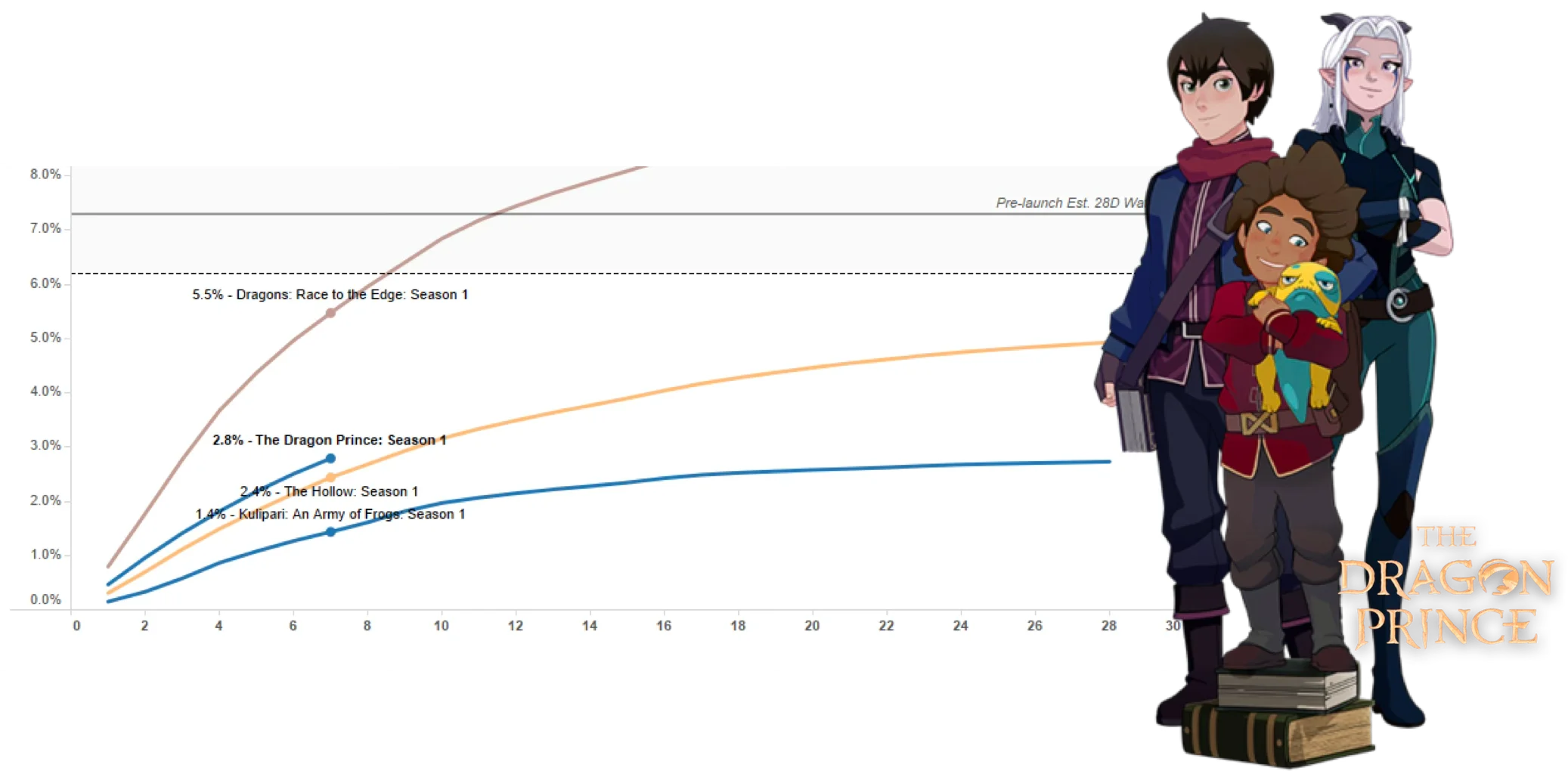
Netflix has been investing heavily in high quality original content for kids but kids aren’t finding it and watching it. Familiar licensed titles remain far and away the most watched titles on the service.
How do we get kids to discover and watch new IP?
Research
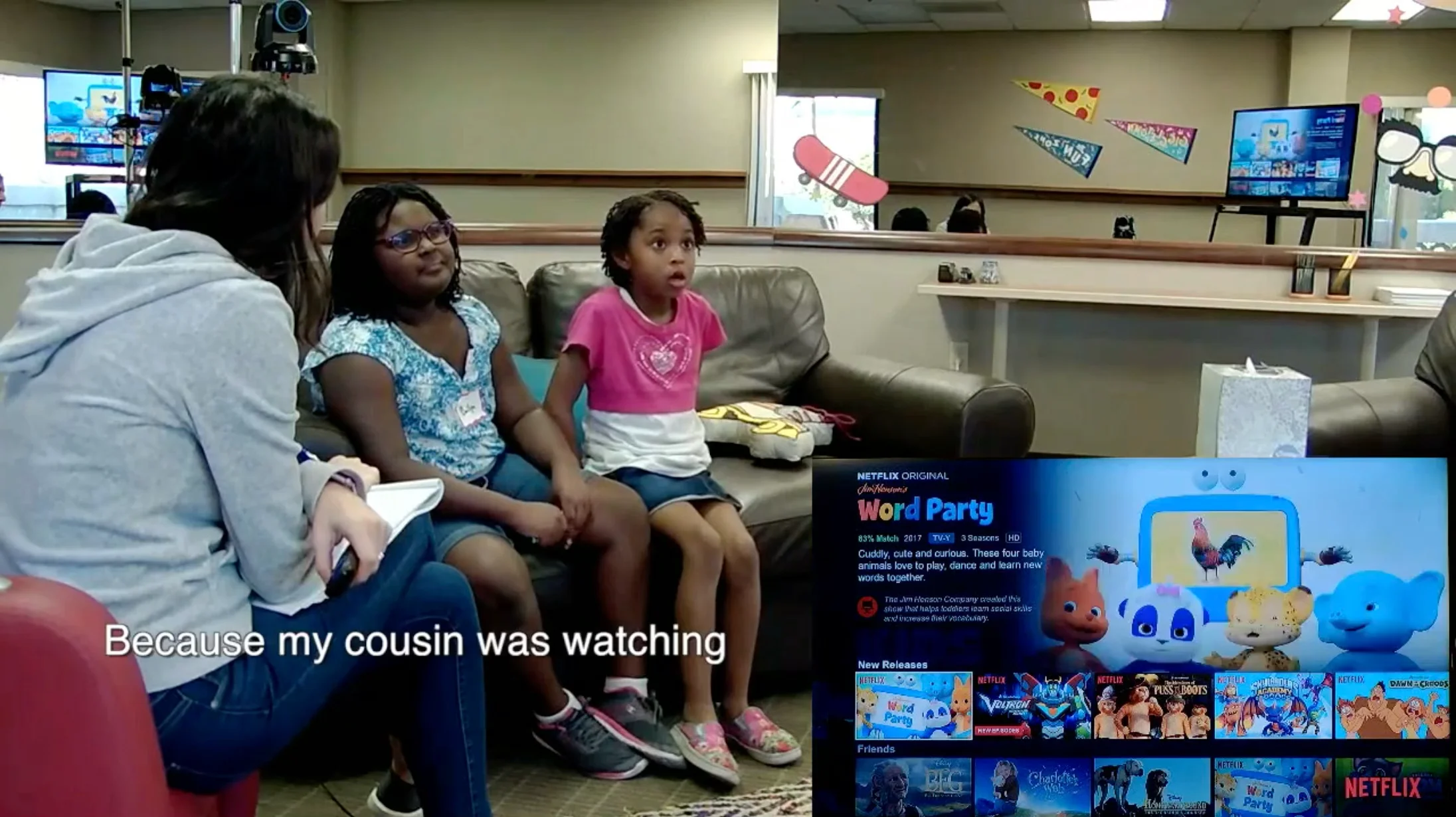
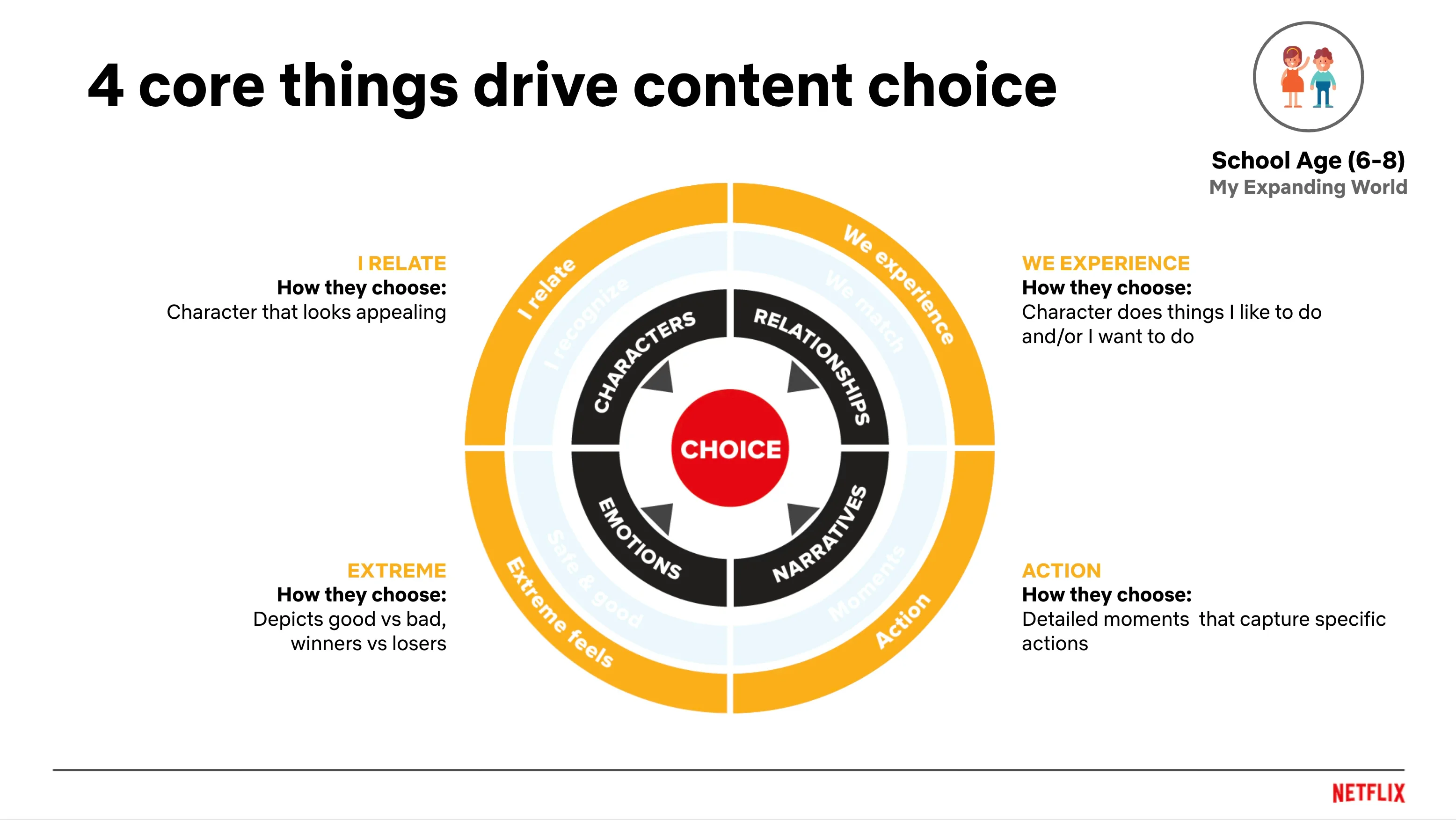
Partnering with my CI partner, we conducted a series of global research studies to better understand the core drivers of meaning for kids and parents. We facilitated qualitative interviews as well as quantitative surveys to our members.
Key findings: Kids love characters.
Blue Sky: Character-Centric UI
With the understanding that characters are the core driver of choice, I went broad in my explorations and concepted a completely re-imagined kids UI driven by characters and socialized broadly; learning a valuable lesson in communication.
For this process I included partners in brainstorms and workshops.
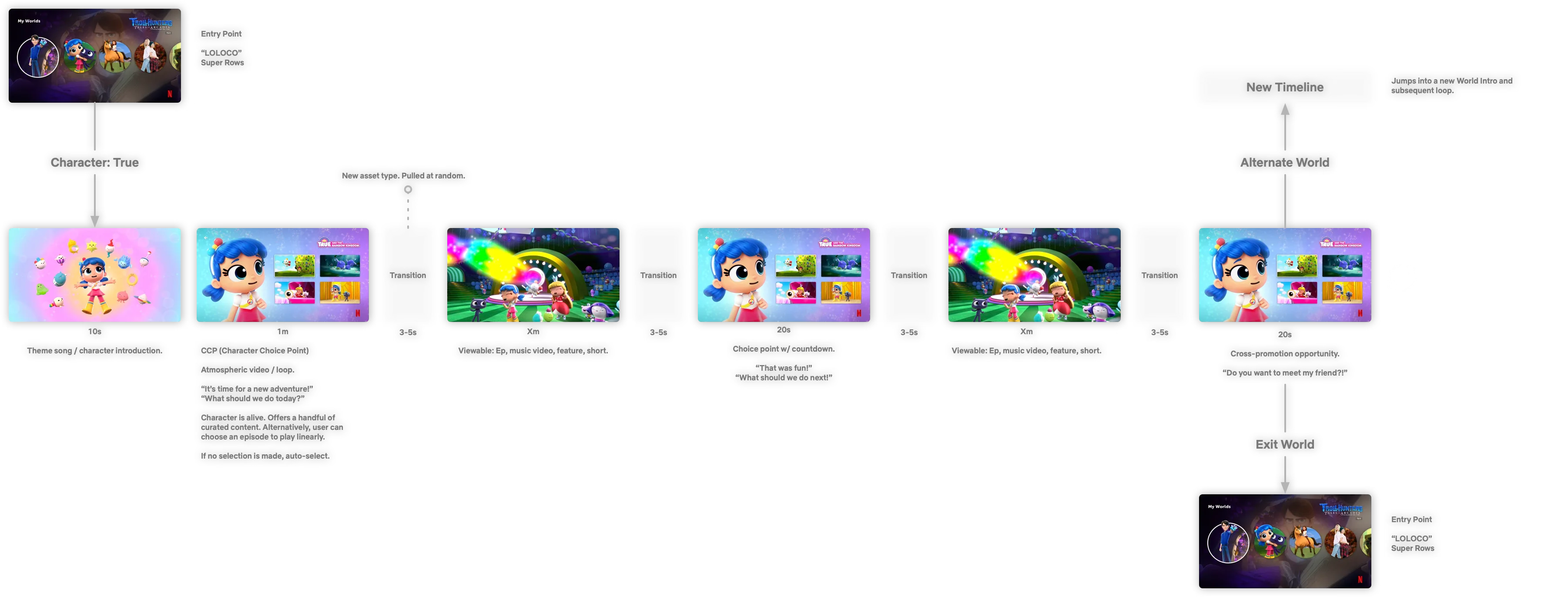
The Entry Point
With a blue sky vision in mind, I began iterating on what the entry point into a character’s world could be. I learned valuable lessons with each prototype.
Hypothesis: Character + Video = Win.
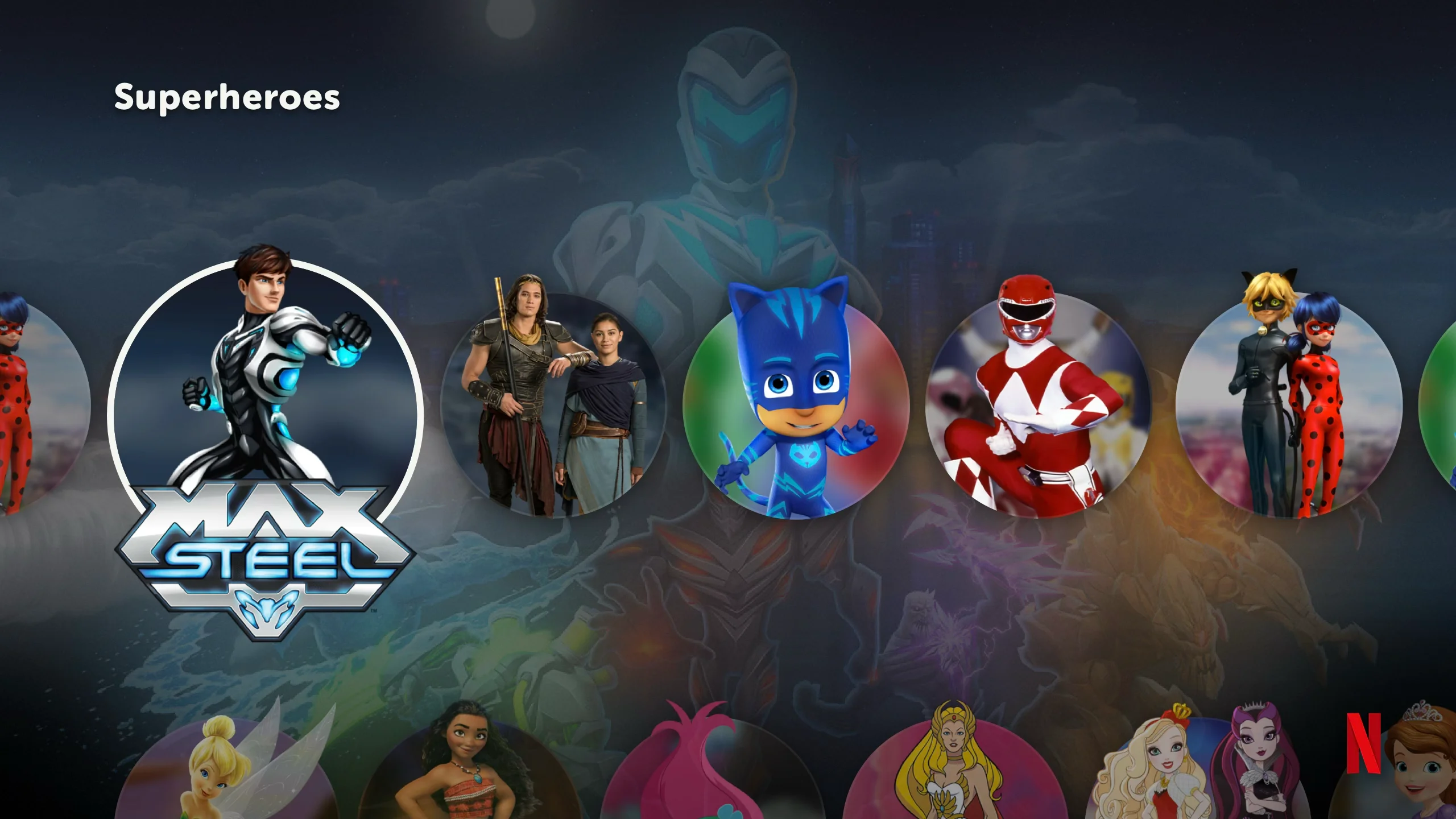
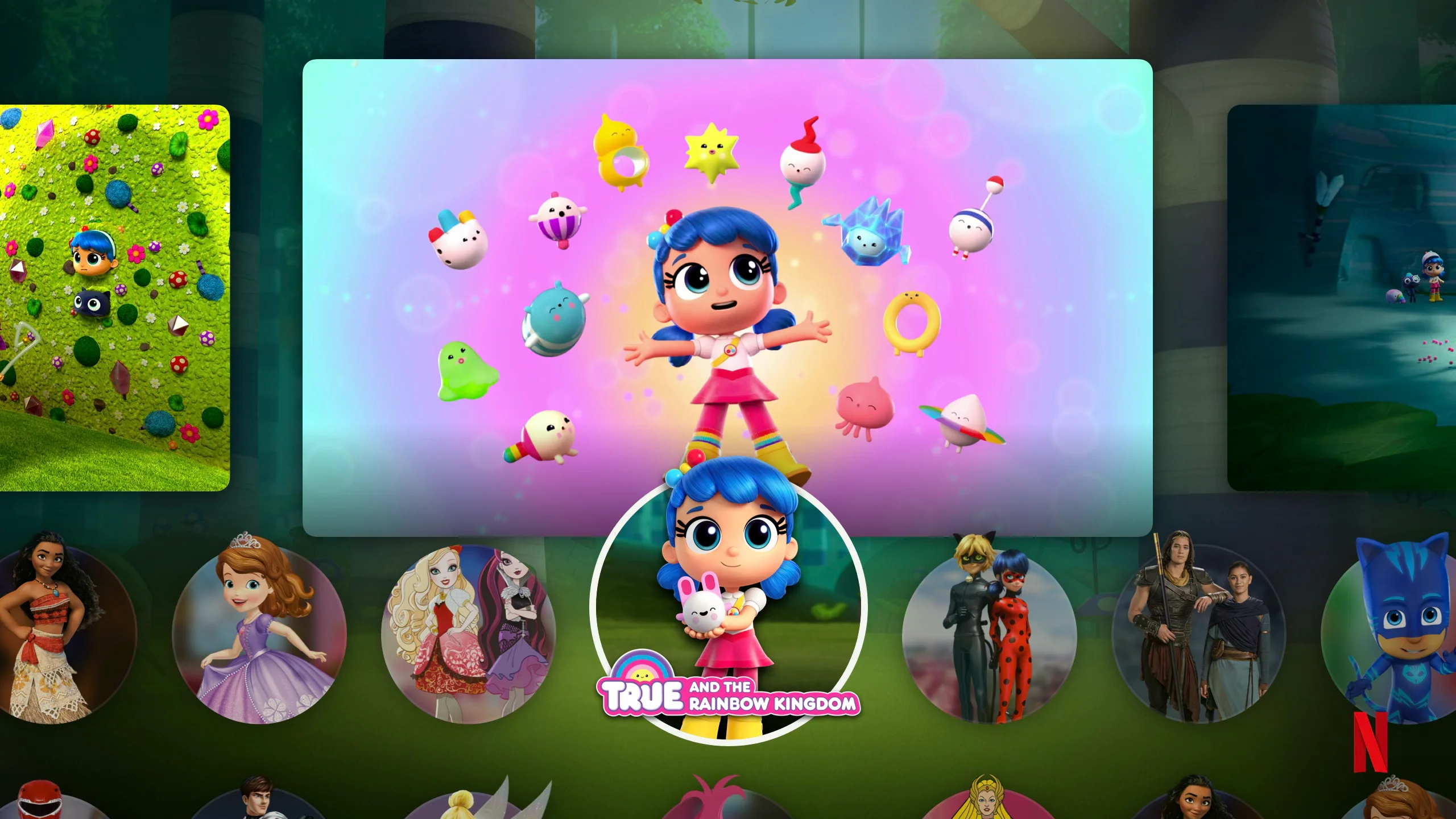
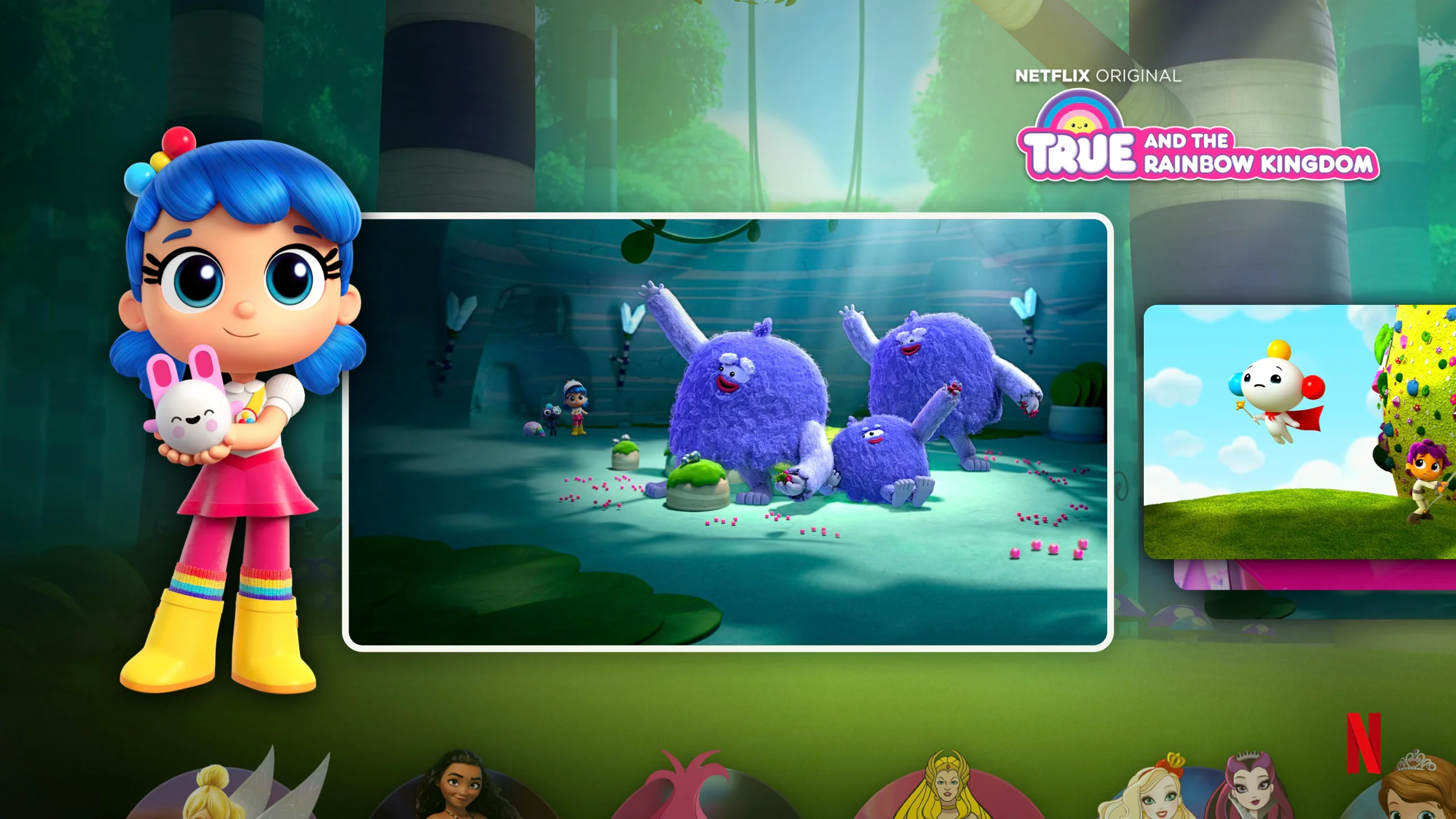
Qualitative Testing
With the help of a prototyper on my team we created 3 prototypes to test in a qualitative environment. The results were overwhelmingly positive.
We learned how powerful a character-forward UI, coupled with instantaneous playback of a short video clip could be.
A’ha!
We realized that this type of character promotion was not a new concept and that in fact linear TV has been doing this for decades in commercials. So we asked ourselves the question:
What would TV commercials look like for kids if Netflix made them?
Visual Explorations
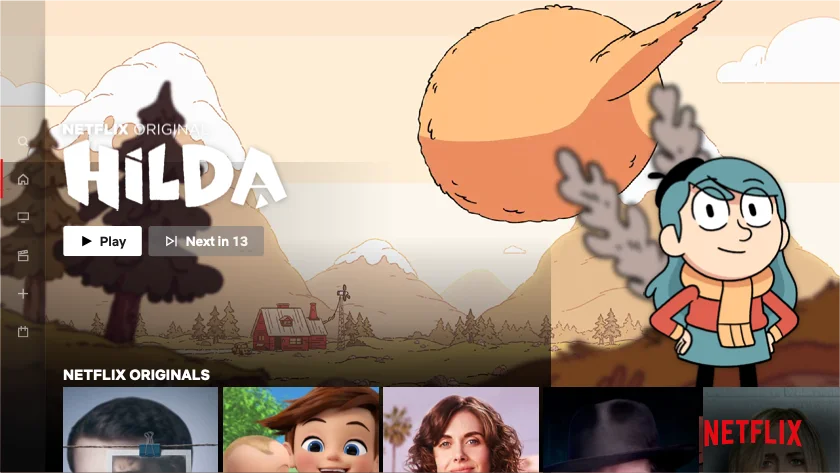
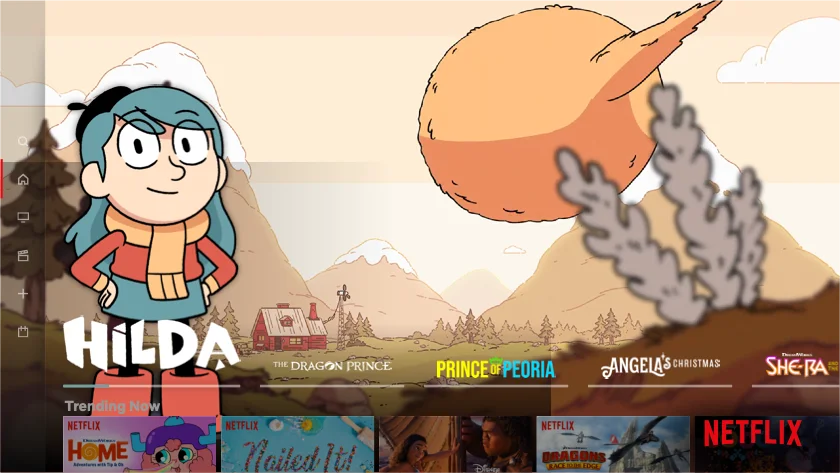
Armed with a hypothesis that a row of autoplaying, short, character-focused videos would bring meaning to unfamiliar titles, I set out to explore:
What might that look like in the current Netflix experience?
Motion Design
Once a design direction was chosen I began working on the details for how the interaction of the canvas should feel. I created detailed definitions for the locomotion of the pods and transitional elements. I then worked with a motion designer to create a concept.
This motion study was instrumental in communicating the concept.

Bringing it all together
Next I worked with my cross-functional partners to develop each aspect of the design. I worked closely with video editors to draft specifications for a 25s, kid-specific video asset.
I worked with a sound designer to create transition assets to keep the canvas stimulating, even at a point of transition.
I worked with front-end and back-end engineers to do the impossible and create instant playback, seamless transitions and motion video.
Huge lessons in the value of partnership for a better outcome.

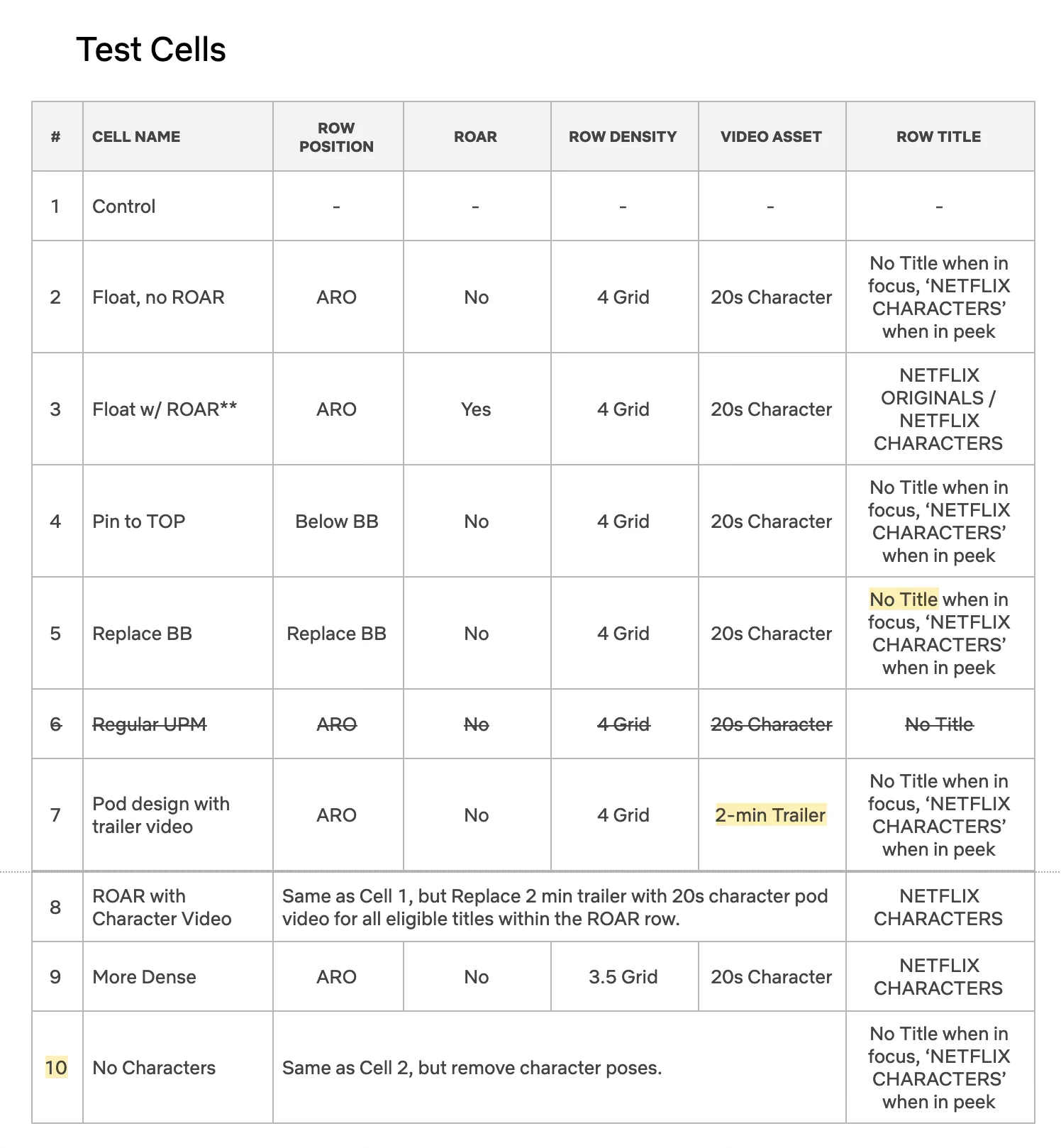
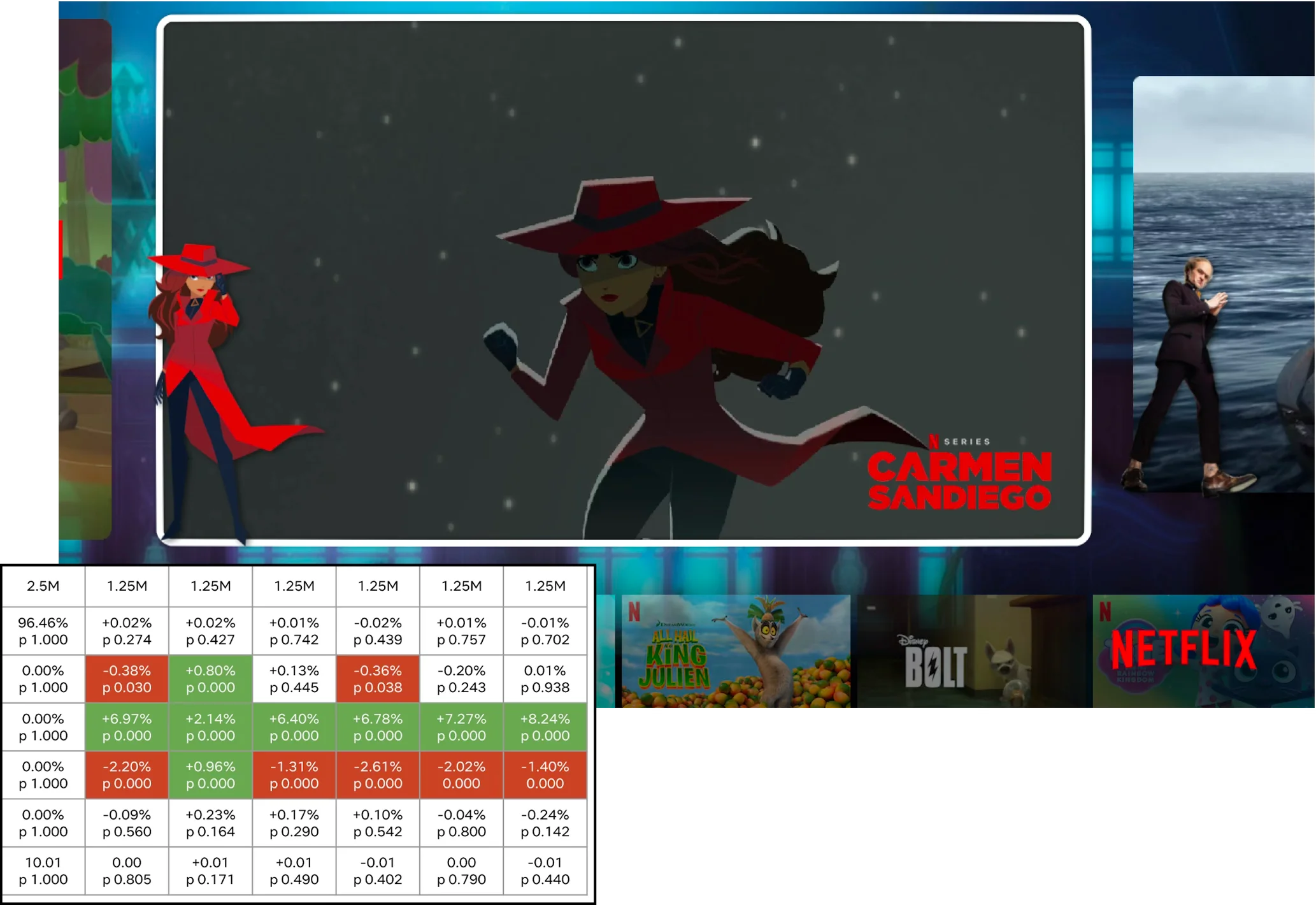
A/B Test Cells
For the next step I worked with my data science partner to design a test cell structure for an A/B test to extract the most meaningfully significant data.
Design Specifications
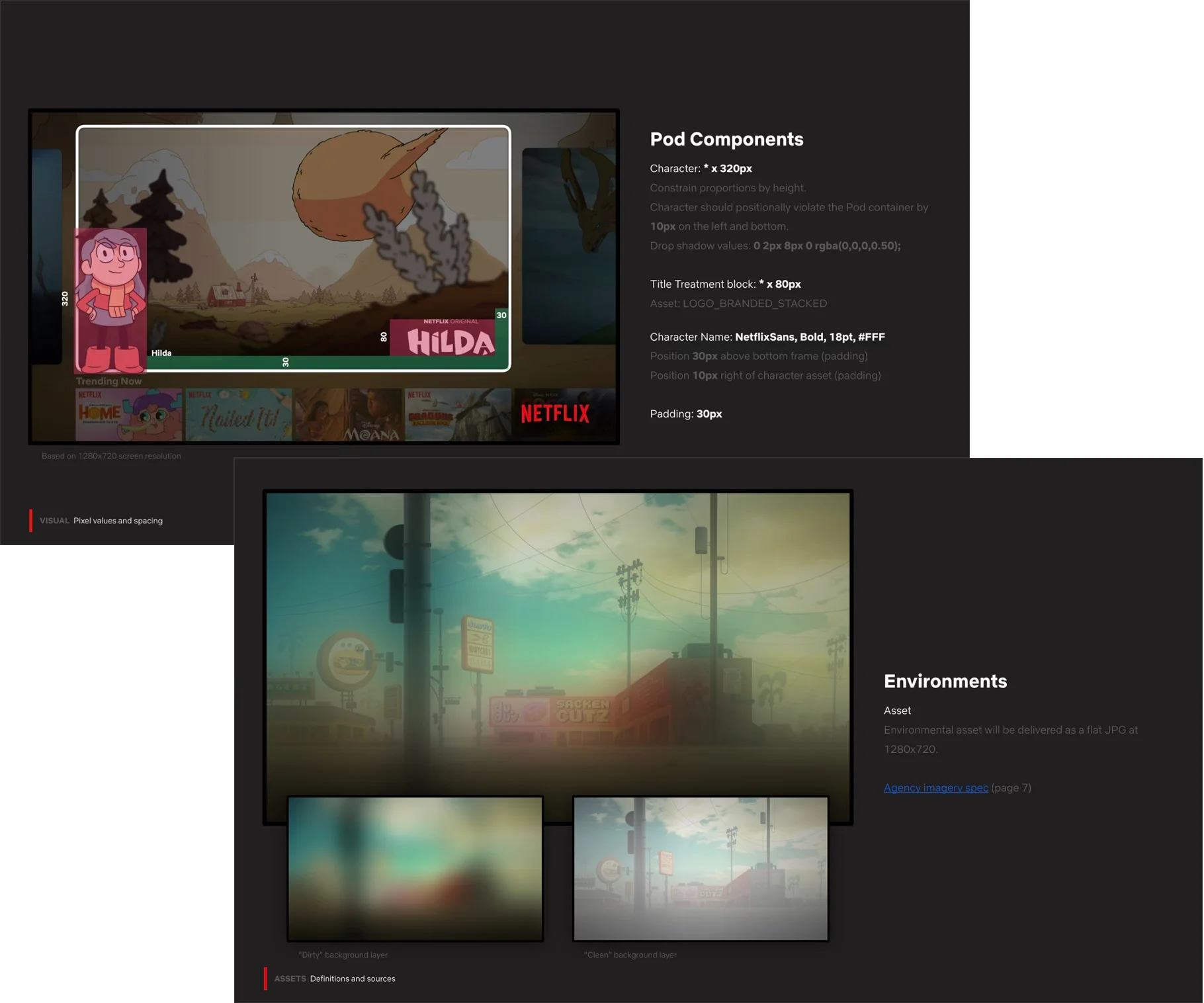
With a cell structure mapped out, I then documented every permutation of the design in a detailed specification document to support engineering teams.
Diving deep revealed plenty of dusty corners to sweep up.
Conclusion
In the end, our hypothesis of an autoplaying, short duration, character-focused row was meaningful in driving awareness and SOP of unfamiliar IP. The test yielded:
- A massive win in New Originals Streaming Hours
- Creative content innovation for kids title promotion
- Technical innovations in seamless video playback
- The first Netflix canvas to utilize UI audio and immersive effects (FX-2)
There were also many great lessons learned:
- Finding inspiration in odd areas (TV commercials)
- Partnership yields a better product
- Going broad to find the perfect narrow
- Even in experimentation, dare to be bold and listen to your gut
Byproducts
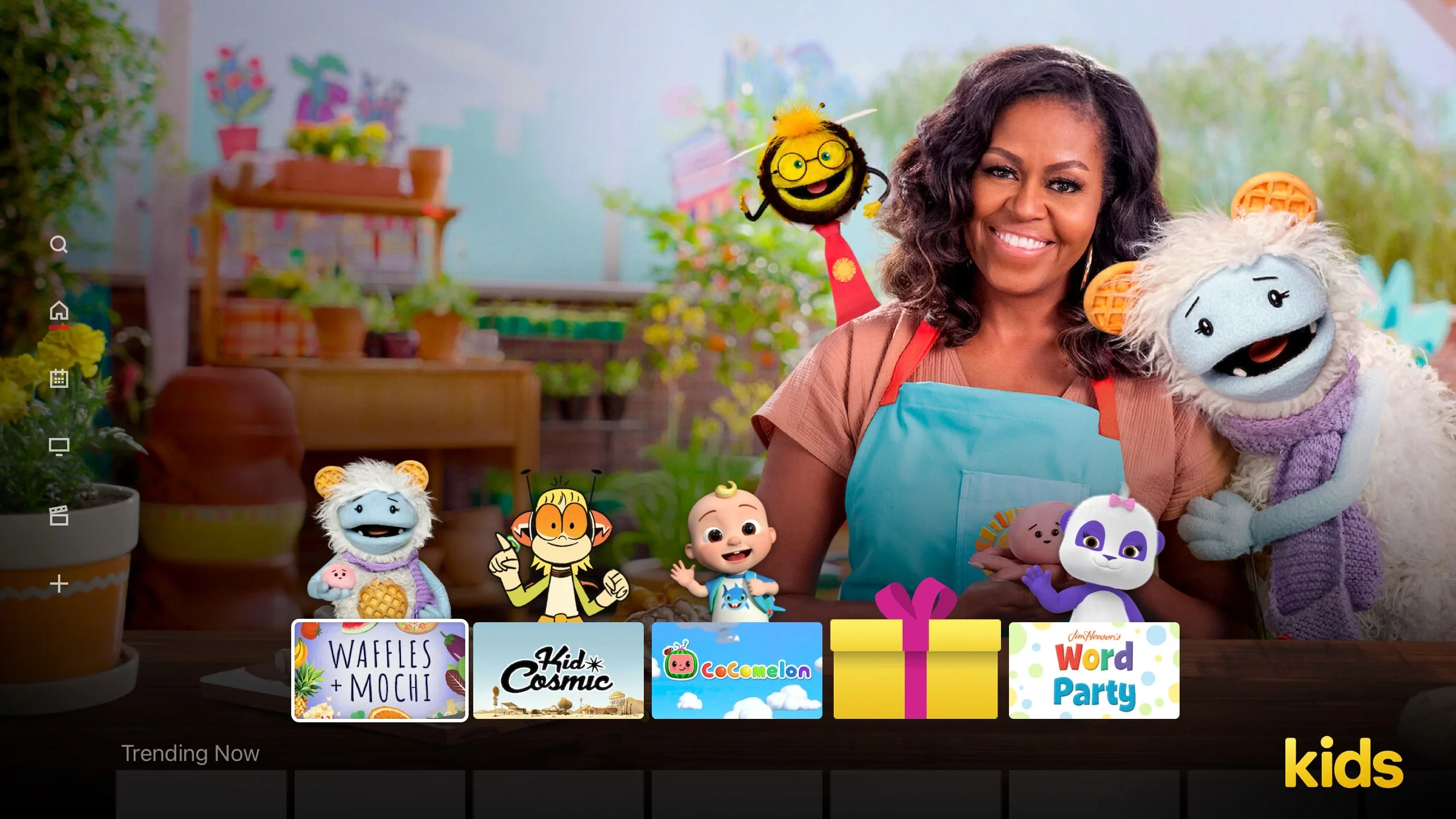
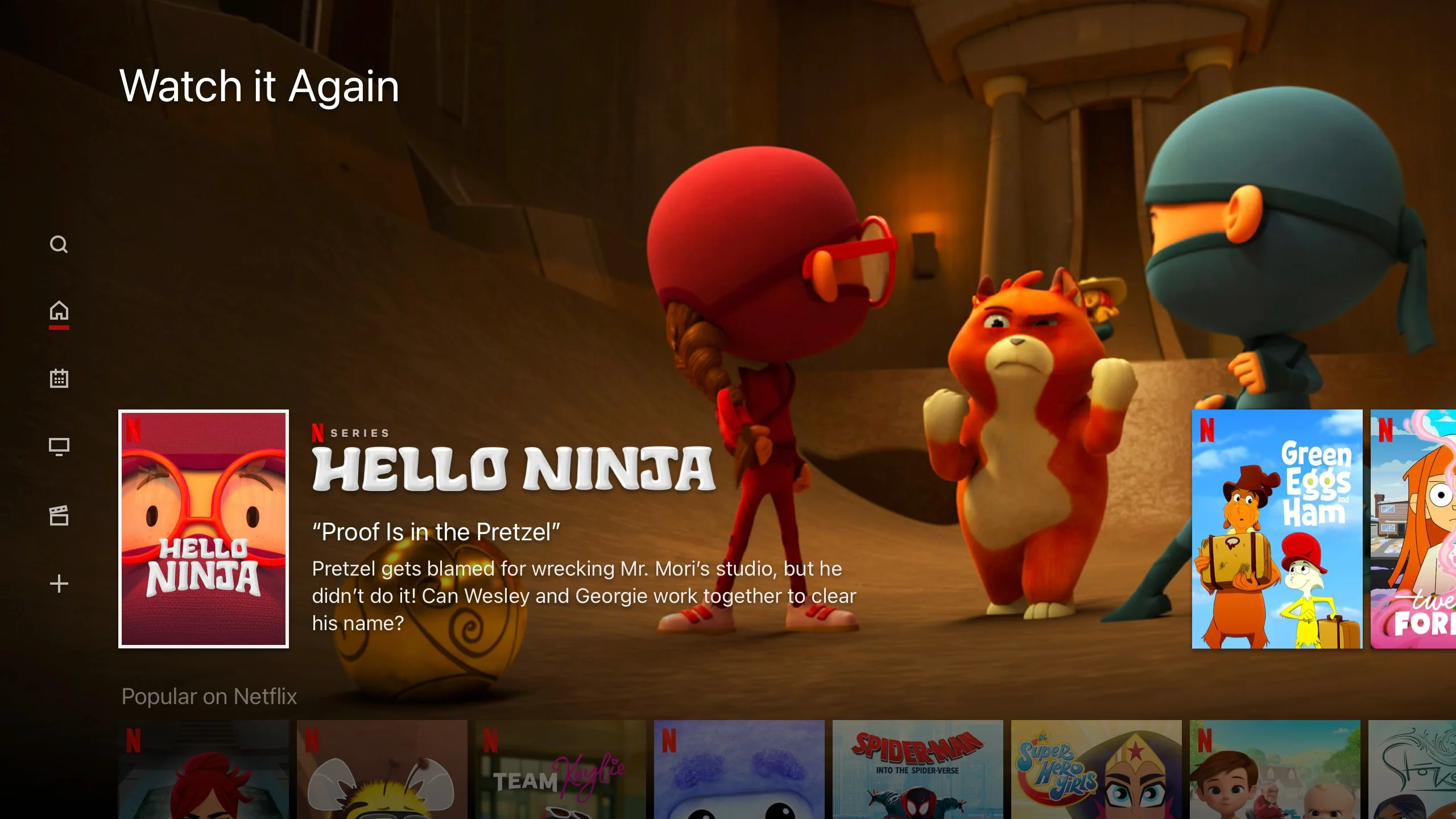
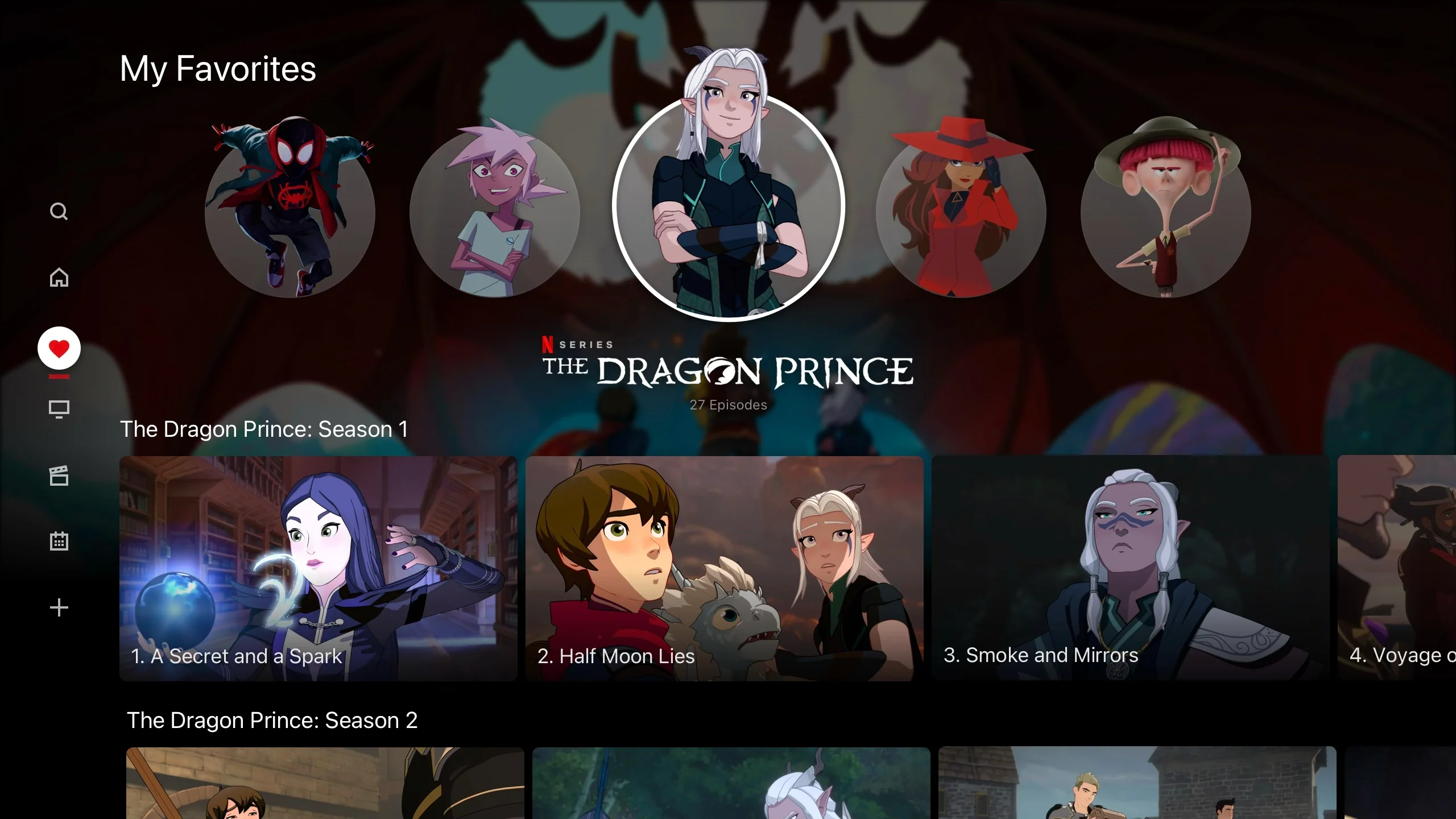
After productizing, the learnings from Kids Character Pods superseded many future explorations and product innovations, including:
- Project Mystery
- Multi-title Billboard
- Kids Favorites
Date: February 2018 - 2022
Company: Netflix
Projects: Netflix Kids, TV Experience, and Netflix Games
Role: Staff Product Designer